
Quick answer
Yes, for most visitors Selous is safe, largely because access is tightly regulated. Gates operate 06:00–18:00 every day of the week, and the conservation fee is 82.6 USD per non-resident adult per 24 hours, including 18% VAT. Risk rises outside those hours and in the March–May rains, when tracks flood. Arrive between 06:00 and 09:00 for cooler temperatures and active wildlife.
Selous is not a park so much as a country-sized wilderness. Its protected core spans roughly 50,000 square kilometres across the Pwani, Morogoro, Lindi and Ruvuma regions, larger than Switzerland, gazetted in 1922 and inscribed as a UNESCO World Heritage Site in 1982. In 2019 the northern photographic sector was re-designated Nyerere National Park, which is where nearly all visitors now travel. That scale is the reason the question is it safe to go on safari in Tanzania resists a one-word reply: conditions in a managed game-viewing zone along the Rufiji River bear little resemblance to the remote southern blocks. In practice, safety here is a function of structure rather than luck. Access is regulated by gate hours of 06:00–18:00, seven days a week, which effectively removes night driving from the equation. A conservation fee of 82.6 USD per non-resident adult per 24 hours, including 18% VAT, funds the ranger presence, road maintenance and anti-poaching patrols that make the ecosystem legible to visitors. Guides are licensed. Boat safaris on the Rufiji run under their own protocols, since hippos and Nile crocodiles, not lions, account for most wildlife incidents in the country. Camps are unfenced by design, and staff escort guests between tents after dark. The risks travellers actually encounter are mundane. Heat, dehydration and long transfer distances outrank predators by a wide margin. Petty theft is a city concern, concentrated in Dar es Salaam and Stone Town rather than the miombo woodland. Tanzania safari safety, in other words, is mostly logistics. Solo travellers and families alike complete a Selous safari from Zanzibar without incident, year after year, largely because the itinerary is short, guided and tightly scheduled. The dry season, roughly June through October, brings firmer tracks and thinner bush; the long rains of March to May close some roads entirely and shut several seasonal camps. The honest response to is it safe to go on safari in Tanzania is this: yes, conditionally, and the conditions are knowable well in advance. Arrive between 06:00 and 09:00, when animals are moving and temperatures have not yet peaked. Budget the conservation fee per 24-hour period rather than per visit, since a two-night stay is charged accordingly. Confirm current gate arrangements with Tanzania National Parks on +255272970404 or at tanzaniaparks.go.tz before fixing a departure date, then match those dates to a scheduled, guided itinerary rather than improvising on arrival.
“Safety in Selous is a function of structure, not luck.”
Is It Safe to Go on Safari in Tanzania? Myths vs. Facts
Misconceptions about safari safety often stem from dramatic media portrayals of wildlife encounters and generalized travel warnings. Understanding the structured security protocols in Nyerere National Park helps travelers assess the actual risks accurately.
MythWild animals frequently attack safari vehicles during game drives.
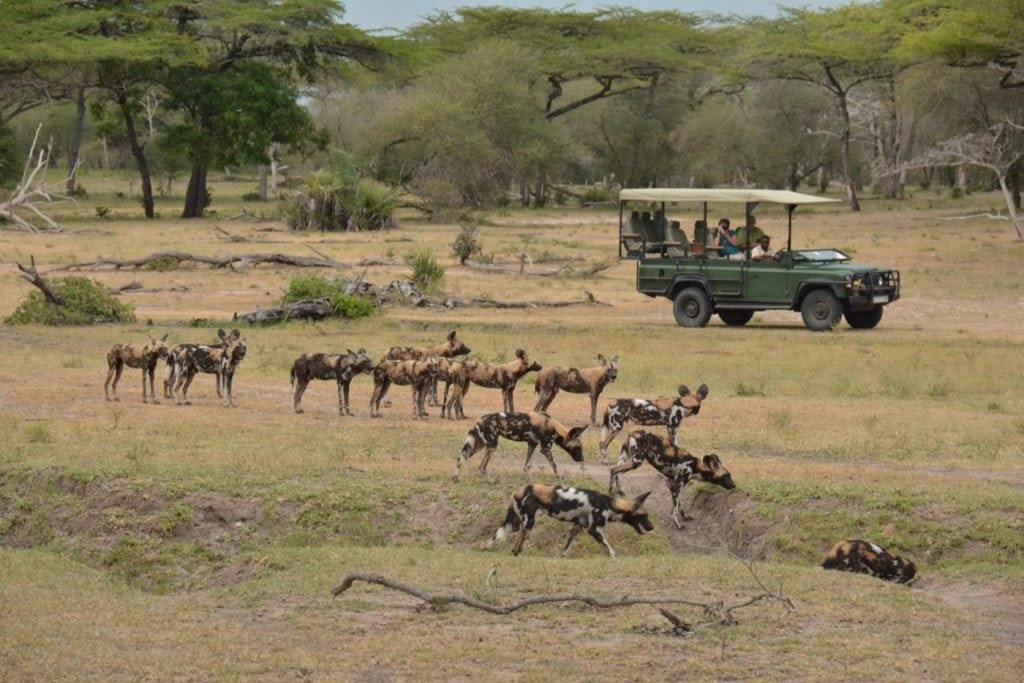
FactAnimals in the reserve are habituated to the shape and sound of vehicles and generally ignore them as non-threatening. Attacks are extremely rare and avoided by maintaining a respectful distance.
MythThe remote wilderness of the reserve is more dangerous than Tanzanian cities.
FactStatistically, managed conservation areas experience much lower rates of crime against tourists than busy urban transit hubs. The park is highly regulated with controlled entry points and patrol systems.
MythVisitors can wander the reserve at any time without tracking or regulation.
FactThe park enforces strict operational hours from 06:00 to 18:00, and all visitors must register at official gates. Authorized rangers monitor the reserve to maintain security throughout these hours.
Is It Safe to Go on Safari in Tanzania? Rules for the Wilderness
In Selous (Nyerere National Park), safety rests on behaviour rather than luck: the animals are wild, unfenced and habituated to vehicles, not to people. Guide instructions and vehicle discipline are what keep an encounter uneventful.
Do
- Stay seated inside the vehicle unless your guide permits otherwise
- Follow your guide's instructions immediately, without discussion
- Speak quietly near predators and lower your voice at sightings
- Keep arms, cameras and legs inside the vehicle frame
- Arrive between 06:00 and 09:00 for cooler, active game viewing
- Wear muted greens, browns and khaki; avoid bright white or black
Don't
- Never exit the vehicle for photographs, views or a closer angle
- Do not feed any animal, including monkeys and baboons at camps
- Avoid flash photography, which startles predators and nocturnal species
- Do not stand, shout or make sudden movements at a sighting
- Never block another vehicle's view or crowd an animal's escape route
- Do not leave food, bags or litter unattended in open vehicles
Is It Safe to Go on Safari in Tanzania? Expert Tips for Choosing Operators and Lodges
Selecting a vetted operator and understanding lodge safety protocols is crucial for a secure safari experience in the Selous Game Reserve.
Verify the TALA License
Always request proof of a Tourist Agents Licensing Authority (TALA) license issued by the Ministry of Natural Resources and Tourism. Operating without this document is illegal and leaves you without legal recourse in case of disputes.
Cross-check TATO Membership
Check if the operator belongs to the Tanzania Association of Tour Operators (TATO). While not legally mandatory, TATO membership provides an extra layer of financial security and dispute resolution assistance.
Demand Certified Field Guides
Confirm that your safari operator employs guides certified by recognized Tanzanian wildlife colleges. Qualified guides have formal training in animal behavior and wilderness first aid, minimizing risks during close encounters.
Assess Lodge Security Measures
Choose wilderness lodges in Nyerere National Park that provide armed rangers or Maasai askari escorts after dusk. Because many camps are unfenced, walking between tents and communal dining areas alone at night is highly discouraged.
Secure Your Booking Payments
Make safari payments only via bank transfer or secure online merchant portals rather than personal money transfer applications. Registered operators provide an official invoice matching the registered name on their TALA license.
Confirm Vehicle Communication Tools
Ensure your operator's vehicles are equipped with long-range VHF radio systems. Large sectors of the Selous Game Reserve have no cellular signal, making reliable radio contact with park rangers critical for safety.
Safe Arrival: Air vs. Road Transport in Selous and Southern Tanzania
Selous Game Reserve sits within the Pwani, Morogoro, Lindi & Ruvuma Regions, Tanzania, and is typically reached from Dar es Salaam or Zanzibar. Flying via light aircraft to local airstrips like Mtemere is widely considered the safest, fastest, and most comfortable transport method because it entirely avoids the security hazards, river crossings, and unpredictable road conditions of driving through rural southern districts.
TAZARA Railway from Dar es Salaam to Matambwe station
B2 Highway from Dar es Salaam to Mtemere Gate via Kibiti
Local bus from Temeke Sudani in Dar es Salaam to Mloka
Private 4x4 transfer from Julius Nyerere International Airport to Mtemere Gate
Ferry from Zanzibar to Dar es Salaam port followed by road transport
Health, Vaccines, and Packing Security Checklist for a Safe Tanzania Safari
Most safari health risks in the Selous are manageable if you handle vaccines, prophylaxis, insurance, and clothing in the right order before departure.
-
Check yellow fever certificate rules early — Tanzania requires proof if you arrive from or transit a yellow fever country, and the vaccine needs 10 days to take effect.
-
Start malaria prophylaxis on schedule — The Selous is a year-round malaria zone, and most regimens begin one to two days or up to two weeks before arrival.
-
Review routine and travel vaccinations — Typhoid, hepatitis A, tetanus and rabies cover are commonly advised for remote reserve stays far from hospitals.
-
Buy emergency evacuation insurance — Clinics are hours away, so cover should include air ambulance to Dar es Salaam or Zanzibar.
-
Pack long neutral-toned clothing — Long sleeves and trousers in khaki, olive or beige reduce insect bites and sun exposure.
-
Carry repellent, sunscreen, and a small kit — Bring DEET or picaridin repellent, high-SPF sunscreen, rehydration salts, and any prescription medicines in original packaging.
-
Budget the conservation fee per person — Entry is 82.6 USD per non-resident adult per 24 hours, including 18% VAT.
-
Plan a 06:00–09:00 arrival — Gates operate 06:00–18:00 daily, and early arrival means cooler temperatures and more active wildlife.
Check availability
Safety Guide for Selous and Tanzania Safaris
Everything you need to know about is it safe to go on safari in tanzania